
Art dealer and art historian Jan Six recently revealed that he had discovered and purchased a new Rembrandt.
The painting had been in the hands of a noble British family for years, who had no idea of its value. When it ended up at auction in London, as one of the ‘deemed less important’ works, Six immediately saw that it was a Rembrandt. Not unimportant: Jan Six is a young descendant of Jan Six, portrayed by Rembrandt in 1654, and specialized completely in Rembrandt’s work. Six’s opinion is currently shared by several art historians and specialists, including the well-known Rembrandt expert Ernst van de Wetering.
A real Rembrandt or not, the price for which Six bought her will double many times over. “What is reality?”, you may ask. If the majority of renowned experts say that a work is by a certain artist, then is this true? Who then decides who is a renowned expert? Why didn’t the auction house in question see that it was a Rembrandt? It is an interesting fact: reality in art sometimes seems to be a relative concept. In this case it is about the authenticity of a work, but the subject that is depicted can also be related to reality in various ways. A fascinating distinction can be made here between figurative and abstract art.
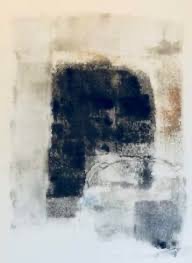 For Willem Boronski, reality does not mean a figuratively represented reality. His work made a striking development from figurative still lifes to expressive, abstract works. With his abstract art, Boronski tries to encourage the viewer to discover their own reality. According to Boronski, reality is not the same for everyone. Reality cannot be captured in words and has little to do with a bowl of apples or oranges that is presented in the best possible way. For Willem Boronski it is all about the experience, the relationship between viewer and work of art. Take, for example, the work ‘The Joker to the Thief’. The dark central area contrasts with the light parts painted around it. The abstract surfaces are perfectly balanced, but do not give any suggestion of a figurative subject.
An answer to the question: “What is reality?” is not easy to give. In the case of the Rembrandt, it is about authenticity and research techniques are involved to substantiate the answer. For Boronski, representing reality in art means encouraging the viewer to look without prejudice. Without a preconceived idea of what is there
depicted. Only in this way can you create your own reality. Check out “The Joker to the Thief” and
